

Despite the fact that different species’ seeds can closely resemble each other, their end results can vary drastically. Leaders, too, may not differ significantly in appearance, but the outcomes of their direction can be quite distinct. Just as we classify different flowers into categories based on their distinguishing features, we can classify different forms of leadership according to their defining qualities.
Among the forms or manifestations of leadership is the concept of strengths-based leadership, which entails the identification and subsequent cultivation of followers’ strengths. We can expect the greatest performance from workers when there is an alignment between their strengths and the tasks assigned to them. Thus, strengths-based leaders can significantly (and positively) impact productivity by fostering the assets possessed by both themselves and also by those they lead.
Such an approach stands in stark contrast to a leader that uses fear and intimidation to drive results. Unfortunately, there is a disconnect between the state of the science on strength-based leadership theory and the implementation of the science for the concept in much of the working world. Tilt 365’s assessments and expertise–as well as the remainder of this blog–can assist in diminishing this divide. It is important to know, however, that not all leadership styles can exist in all types of organizations, but the more organizations that are able to successfully adopt strengths-based leadership activities the better.
What is Strengths-Based Leadership?
Strengths-based development and strengths-based organizational management are phrases used synonymously with strengths-based leadership (according to Strengths-Based Leadership by Tom Rath and Barry Conchie). Peter Drucker is quoted saying, “The effective executives build on strengths–their own strengths, the strengths of their superiors, colleagues, and subordinates.” Suggested by this is the notion that leadership (in general) is not inherently a top-down construct; rather, it’s important to be cognizant of how we can strengthen those above us, not just those below us.
Someone who embodies strengths-based leadership works to ensure that teams are able to successfully execute a variety of tasks, to know what aid followers could benefit most from, and to help followers access the tools and support they need to excel in their professional roles. Perceiving the value of these strengths-based leadership activities is pretty easy.
A construct that has a good deal of overlap with strengths-based leadership is appreciative inquiry, which aims to enable strengths development by establishing a culture in which those strengths are highly valued. Appreciative inquiry contributes strategies for identifying operational strengths, planning for best practices in future endeavors, making those endeavors a priority, and then proceeding with thoughtful execution. A defining feature of appreciative inquiry that separates it from strengths-based leadership is that it is undertaken on an organizational level while individuals, not larger entities, practice strengths-based leadership.
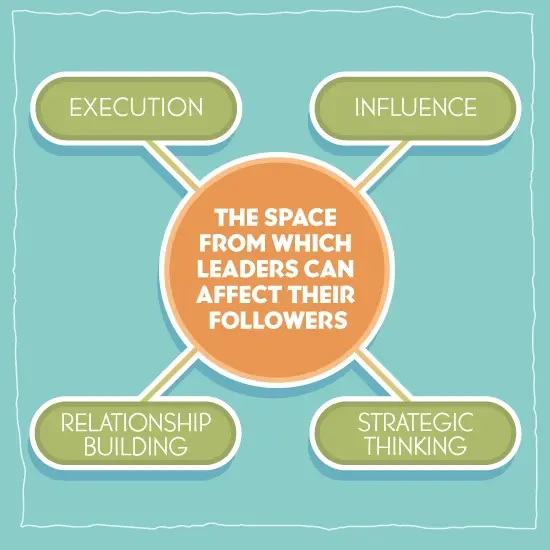
Some people are curious about the concept of “strengths-based leadership categories.” While the phrase itself does not correspond to existing theories we are aware of, Strengths-Based Leadership by Tom Rath and Barry Conchie discusses categories or domains of leadership: Executing, Influencing, Relationship Building, and Strategic Thinking. They explain that these four categories of strengths consummate the space from which leaders can affect their followers. If you’re looking for leadership books to read, we know of a popular one focused on great leaders, teams, and why people follow.
As the science and education around strengths-based leadership continue to flourish, there may, at some point, be data that enables the delineation of strengths-based leadership categories.
What is Strengths-Based Leadership Theory?
The strength-based leadership theory is centered around one core concept— that tasks and responsibilities should be delegated to team members based on their areas of expertise or excellence.
The theory is based on the VIA Character Strengths Survey, which was originally developed by Chris Peterson, a psychology professor from the University of Michigan and Martin Seligman, founder of the Positive Psychology Center at the University of Pennsylvania.
There have since been several other reports related to the topic that have shaped the theory or contributed to its development. Many of the world’s top enterprises and organizations follow the theory of strengths-based leadership, trusting the more than 30 years of research that has gone into verifying its efficacy.
In order for the theory to be fully effective, senior-level managers must commit to leading in a way that prioritizes the positive attributes each individual possesses, and that also encourages those individuals to put their attributes into action cohesively to achieve common goals.
The Benefits of Strengths-Based Leadership
Creating a united team is a critical component of any successful venture. Below are three ways strengths-based leadership improves collaboration and contributes to better business outcomes:
1. Higher Employee Engagement
When effective leaders discover the distinct capabilities of each employee and delegate work based on those capabilities, it empowers employees and leads to higher job satisfaction. It also makes them comfortable enough to share ideas and strategic insights with their peers and superiors. And since we know 77 percent of employees do their best work when strongly engaged, this is a benefit that truly drives productivity and significantly improves performance.
2. Lower Turnover Rates
When companies find themselves in a situation where employees are leaving, switching to strengths-based leadership is often an effective solution. Employees want to feel cognitively challenged within their roles and they want to feel as though their talents are being utilized. In fact, employees who consider their work to be mentally stimulating and aligned with their skills are 3X more likely to be engaged at work— which, ultimately, means they’re less likely to seek out other opportunities.
3. Increased Overall Profits