One of the biggest recent stories about implementing transformational change to a workplace culture has had to be Major League Baseball’s new rules. The issue that had to be addressed? The length of time it took to play a game. In 2021, major league games averaged a record three hours and 11 minutes; that’s a full 42 minutes longer than the two hours and 29 minutes they averaged in 1976. (M.Liebovich, The Atlantic). Things are looking up now, thanks to a range of new rules that have sped up the game and have hopefully rescued America’s pastime from irrelevance.
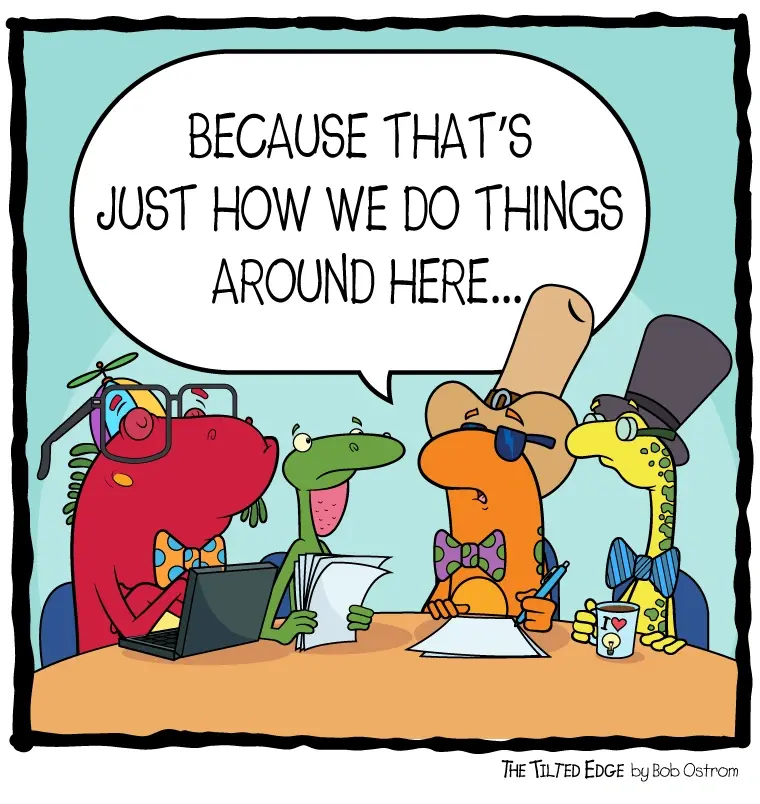
Change is probably one of the hardest things an organization will have to manage, particularly if it has a long history of timeless traditions. When a workplace culture is so protective of its routines, ie; “that’s how we do things around here”, and change-averse, they lose sight of the needs of their customer and suffer the fate of stagnation.
Surely, you’ve experienced a workplace culture where there was a slow but steady deterioration of excitement and a sense of connection to customers. Unfortunately, without a sense of urgency about making change, the status quo is often tolerated. It can require a significant event to bring awareness to the cluttered consciousness of the entire organization. Perhaps it's the threat of downsizing, a big reorg, or a new CEO who is determined to remove the lampshades from management’s eyes to spark new awareness and motivation.
Other times, change can happen within one department, thanks to a manager with an early adopter mindset who wants to improve how their team does things and have more impact on the organization. Rather than tackling change at the macro level, change implemented at the team level can be done rapidly and stands a better chance of success. The other advantage of change done at the micro level? Other teams notice a shift and get curious about why the people on that team are less argumentative and more considerate. Slowly, over time, change in team climate can have a positive, organic effect on the whole organization, as other teams want to have the success that the other team is having with that new program, something called Tilt.

Team transformation with the Team Agility Predictor™ report
You’ve probably witnessed teams that have been unfairly labeled by other parts of the organization as “difficult” and “disjointed”. Oftentimes this is a misperception by stakeholders based solely on trait-based behaviors. Maybe you’ve even been on a team that has struggled with dysfunction. Not only does it have a negative impact on productivity, but it’s pretty soul-crushing for the individuals involved.
Learning how the team is perceived by others at a point in time is one of the biggest advantages of a Team Agility Predictor™ assessment, which can bring renewed hope for a struggling team. It starts with creating awareness. Once the team has a full 360 view of the 12 team character strengths as observed by others, they can identify the areas they can work on as a team to have a more positive team experience and a more positive impact on the rest of the organization.