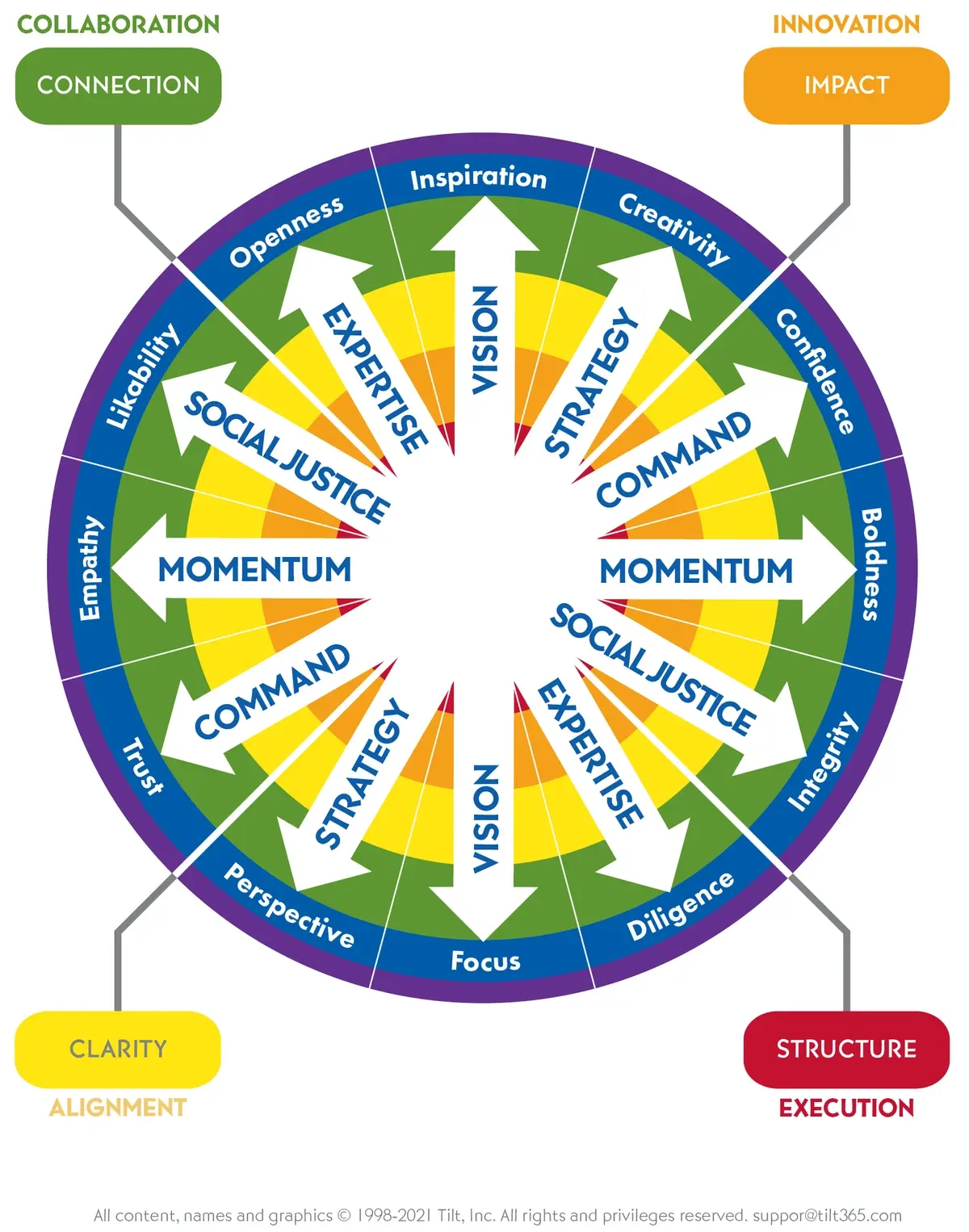

Generativity is the ultimate outcome produced by leaders when they reach their most evolved psycho-social development stage, and it is what some scholars refer to as “servant leadership”. Leaders first embody generativity when they begin to care about more than themselves, their team, or goals by showing concern about the impact of their decisions on the rest of the world. What they then create becomes a catalyst for exponential creativity and productivity, well beyond the original idea. Today, even a platform or technology can begin to generate new creative output or behavior sans input from the originator of the system (Zittrain, 2006). Unlock generative leadership by fostering intrinsic motivation and balancing character strengths. Learn to identify and overcome fear-based behaviors to create agile teams that align, collaborate, execute, and innovate.
The term generativity comes from Erik Erikson’s theory of human development. He defined generativity as a combination of high levels of productivity, creativity, and innovation. According to his theory, people naturally experience conflicts at different stages of their lives and careers. They must grapple with the lesson each conflict presents if they are to transform themselves and proceed to the next level of growth. Although Erikson believed that these stages were correlated with age, there is evidence that generativity is achievable at any age and that it has more to do with a leader’s balanced character strengths and integrative wholeness.
The most salient clue that a leader has reached this ideal level of development (and the associated potential for contribution) is when they care about establishing and guiding the next generation in ways that serve humankind beyond the span of their own life. The existential conflict that usually arises for such a leader is between Generativity and Stagnation. Resolving this conflict can manifest as contributing broadly to the next generations, which is healthy for the individual (and society more generally).
What drives generativity in leaders?
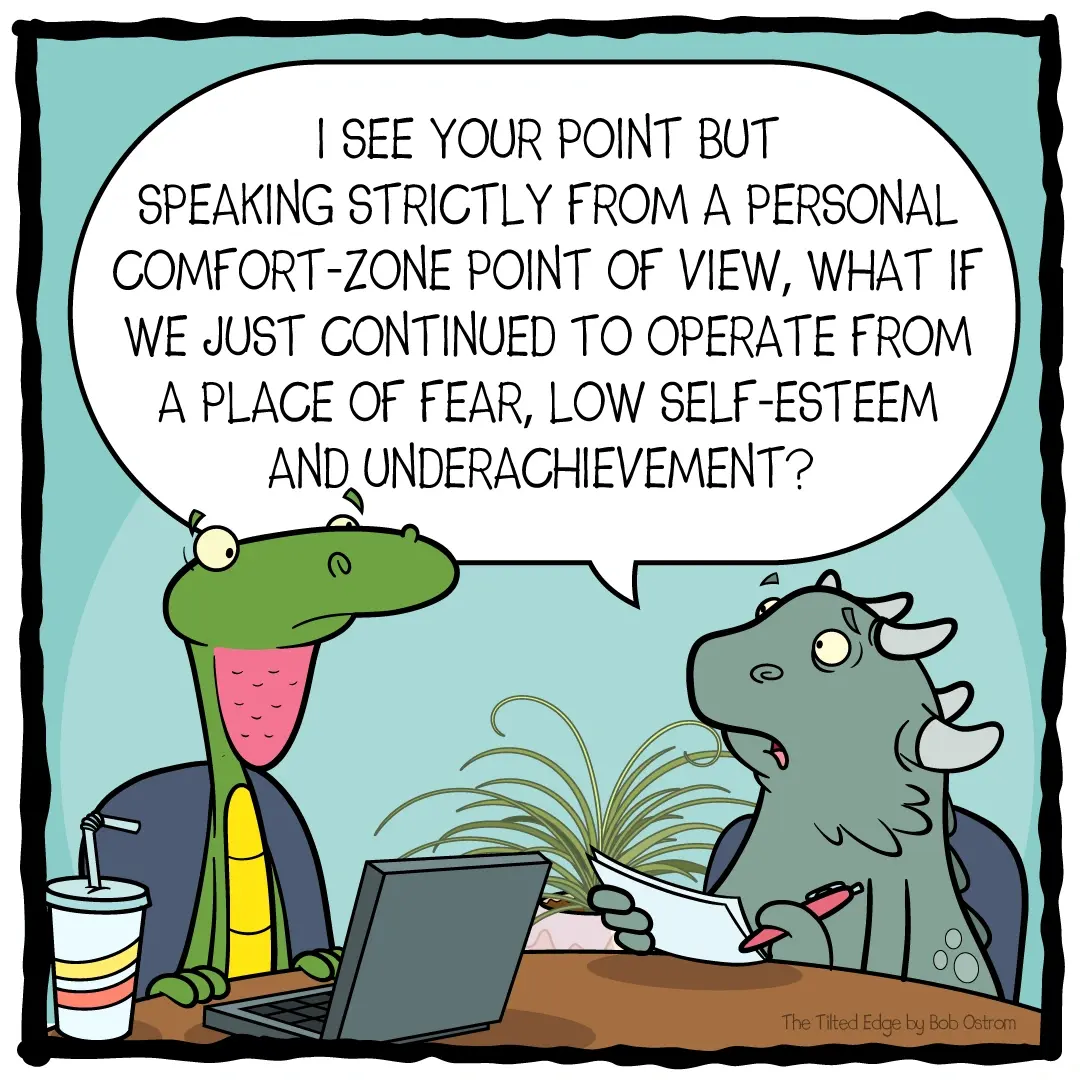
In order to understand what makes leaders generative, one must first understand what might prevent a leader from being generative. Low self-esteem and operating from fear as opposed to operating from inner strength can impede high levels of productive output and result in underachievement. If leaders are extrinsically motivated by performance as others see it, they will struggle to tap into their own creative intelligence. In this case, reward and punishment systems will drive the majority of their behaviors, limiting their potential to make unique contributions.
Reward systems will be associated with two primary things. First, their behavior will reflect the behaviors rewarded through compensation, performance evaluation, and values communicated by the actions of authority figures. While these systems can produce results, they will rarely produce creative contributions of effort or result in broadly adapted innovations. To attain an exponential growth result, leaders must be intrinsically motivated by personal and collaborative performance mastery that comes from inside them. In this way, it enables them to draw on their most innate creativity and imagination without concern for external rewards or punishments. In this state, they are motivated by their own mastery of a new skill or strategy. When multiple leaders reach the level of intrinsic motivation, only then is exponential synergy and generativity possible.
So, what makes one leader intrinsically motivated and another extrinsically motivated? The one difference is their level of self-esteem. When one has low self-esteem, they will look to others for feedback and experience an identity that reflects the idea of the “imposter syndrome”. As a result, inner beliefs and thoughts will reflect inner conflict, indecision, and self-doubt as they interact with others. Consequently, this can spread throughout the organization and affect others who also harbor self-doubt. The general effect is an intense experience of relational triangulation that spreads ego-drama based on four specific fears, as follows:
Loss of approval, which causes them to overcompensate by blaming others.
Loss of attention, which causes them to overcompensate by fabricating untruths.
Loss of status, which causes them to overcompensate by diminishing others.
Loss of power, which causes them to overcompensate by dominating others.
Any of these overcompensating behaviors are toxic to others and disrupt the flow of work substantially (see diagram below).
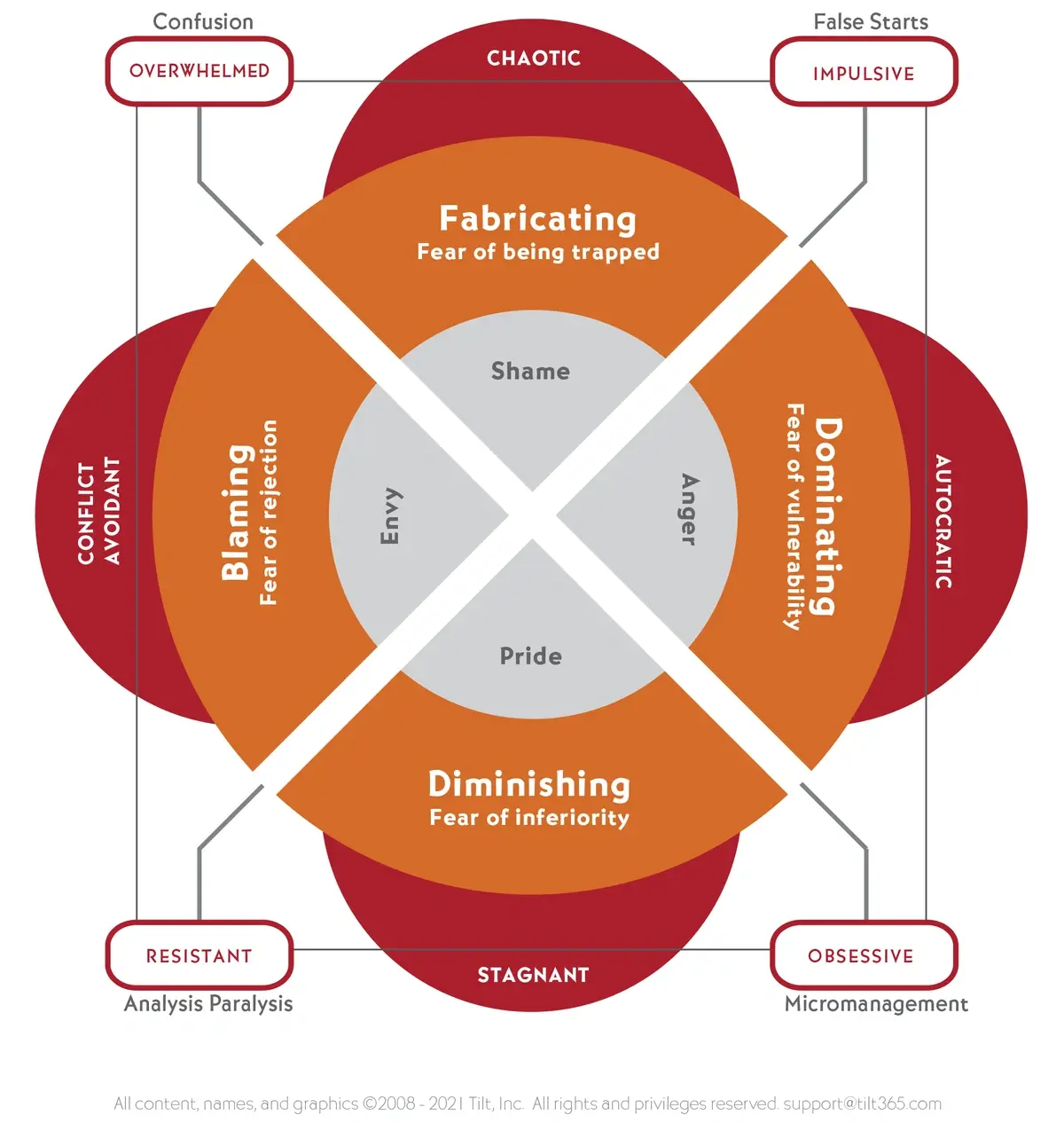
What causes them is a fear-based identity that is more concerned with external feedback than trusting the inner creativity that arises from a strong sense of self. The effect is, in essence, the difference between inner conflict and inner resolve. The former begets external conflict, and the latter results in contribution. All it takes is one leader with self-doubt to derail an entire team and send them spiraling into toxic dysfunction and ”Who’s right?” debate (that usually goes nowhere). If members of the team are focused on self-protective or self-advancing behaviors, the outcomes are wholly reliant on leader values, behaviors, and reward systems. If the values are communicated clearly, the skills are present, and the reward systems produce desired behaviors. If not, the team can perform, but it will not perform exponentially or produce innovation.
If one hopes to effect massive change in a generative direction, it requires investing in the development of the four balanced meta-strengths that create generative wholeness in all leaders of the organization. Only then will drama disappear and foster accelerated energy into collaborative contribution.