

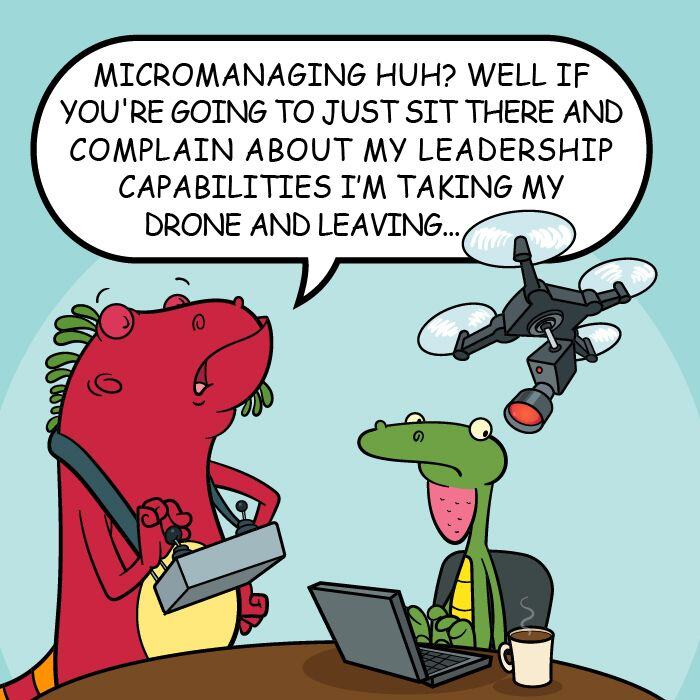
Stress symptom # 1: Obsession & Micromanagement
The first stress pattern is a reaction to a perceived loss of control. This pattern of stress often manifests as criticism about who (or what) impacts the efficiency or accuracy of work. What it’s about (underneath) is a perceived loss of power or status. Since the underlying desire is control and the feeling is to strive for perfection or obsess about being right, this often shows up to others as micromanagement and being critical of others who are less efficient. If it goes too far, the person will resort to discounting another person or group entirely and referring to them as useless or messy.

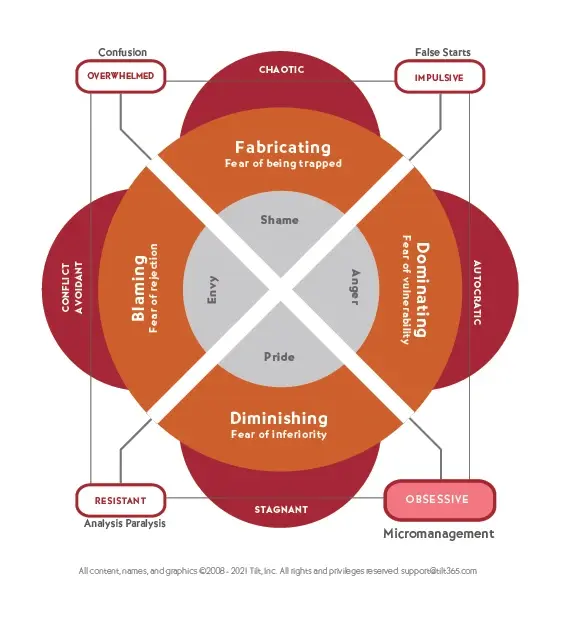
Two internal needs:
This stress reaction helps one to save face with themselves by temporarily propping up their ego with a false feeling of power and status. This short-term reaction where the ego strives to be in control and above others is harmless unless it becomes chronic or extreme in a way that is harmful to others.
What’s good about it?
All human patterns serve our survival in some way. The positive aspect of this reaction is that it gives the person a quick boost of energy needed to solve problems better and faster. While the trigger is in motion, there’s keen alertness to details and a strong drive to solve complex problems that serve stability. While it doesn’t feel pleasant to be on the other end of this interaction, if others learn to recognize that something good is going to come out of it and relax while the person does their thing, it can have very positive results.
What often happens instead:
Instead of waiting to see any positives that may unfold under scrutiny, others often get tangled up in their fears and get involved in the person’s stress reaction while it’s underway. When this happens, it can trigger alarms in others that the person is “out to get them” or “looking to find their error to expose them” or “take over their job or situation.” No one enjoys having their work fall under close scrutiny, after all. But there’s another, better way. If we can all learn to simply notice this pattern, recognize the person’s temporary stress and respond mindfully, we can help the person do what they do best - execute brilliantly. This requires not “taking the bait” and reacting to their stress. An escalation of stress-induced emotion is almost always counterproductive.
A better way to respond more consciously:
A stress response always contains some kind of positive effect if it doesn’t go too far. As such, it can be helpful to point out to the person having the reaction that you are noticing their distress and inquire about how you can help in some tangible way. They may not take you up on the offer, but merely witnessing their stress can help them see the potential impact they are having on others. This can alert them to their unintended effect, so they can proceed with more awareness and intention. If we can remain curious about their reactions and offer to listen it can be very helpful. Saying, “I am noticing that you seem stressed about something and may even be triggered by it, but that may also mean it is important for all of us to hear. How can I help?” Just the act of caring and listening can sometimes be enough to surface “the golden nugget” of truth lying under the surface of the stress reaction.